

 English
For brands, importers, wholesalers, and retailers sourcing DIY Book Nook kits, choosing between OEM and ODM manufacturing can influence product development, customization, costs, and time to market. Both approaches can support business growth, but the right option depends on your design resources, brand positioning, budget, and product launch plans.
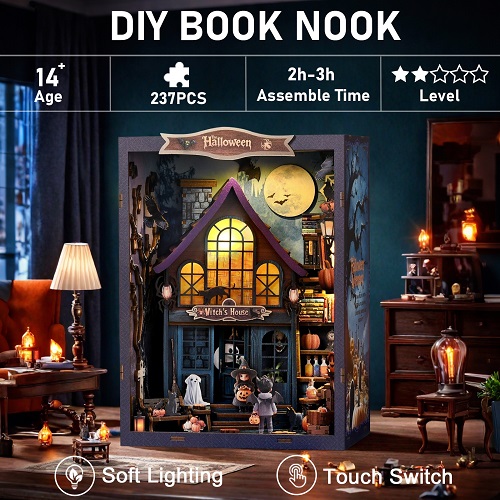
1. What Is OEM Manufacturing for diy book nook kits?
OEM, or Original Equipment Manufacturing, generally refers to producing products according to a buyer's specifications or approved design. In a DIY Book Nook project, the buyer may provide the concept, artwork, dimensions, structural requirements, branding, or other product specifications.
The manufacturer then evaluates production feasibility and coordinates the required manufacturing processes. Depending on the project, these may include prototyping, material preparation, cutting, printing, coloring, component preparation, quality inspection, and packaging.
OEM can be suitable for established brands that already have product development resources and want greater control over the product concept or visual identity.
2. What Is ODM Manufacturing for diy book nook kits?
ODM, or Original Design Manufacturing, generally involves working with a manufacturer that offers existing designs or develops products based on a buyer's requirements. Buyers may select an existing DIY Book Nook design and request adjustments to branding, colors, accessories, or packaging, depending on the available customization options.
This approach can help businesses build a product assortment without managing every stage of design development themselves. It may also reduce the amount of initial development work compared with creating a completely new product from scratch.
However, buyers should confirm which elements can be customized, whether designs are exclusive, and how design rights and usage permissions are handled.
3. OEM vs. ODM: Key Differences
| Factor | OEM | ODM |
|---|---|---|
| Design source | Often based on the buyer's design or specifications | Often based on the manufacturer's existing designs or development capabilities |
| Customization | Can be extensive, depending on technical feasibility | Usually depends on the available product and customization scope |
| Development workload | May require more buyer-side design preparation | May require less initial design work from the buyer |
| Development schedule | Depends on design complexity and sampling requirements | May be shorter when using an existing design |
| Suitable for | Brands with specific product concepts or technical requirements | Businesses seeking to develop an assortment using existing product designs |
These differences are general guidelines rather than fixed rules. Actual development time, costs, customization scope, and intellectual property arrangements depend on the individual project and supplier agreement.
4. When Should You Choose OEM?
OEM may be appropriate if your business has a distinctive product concept, established design specifications, or a strong need to differentiate its product range.
You have original artwork or a detailed product concept.
You need specific structural dimensions or miniature components.
You want a product designed around a particular brand identity.
You have clear packaging and market requirements.
You can participate in design reviews and sample approvals.
Before beginning an OEM project, clarify the product specifications, prototype process, design revisions, material requirements, quality standards, and ownership of the supplied or newly developed design.
5. When Should You Choose ODM?
ODM may be a practical choice if you want to launch DIY Book Nook products without developing every design independently. It can be useful for retailers testing a new category, wholesalers expanding their assortment, or brands seeking products that can be adapted to their existing sales channels.
You want to select from existing product designs.
You need a relatively straightforward route to product selection.
You mainly require branding or packaging adjustments.
You want to test market demand before investing in original designs.
You prefer to use the manufacturer's existing product development capabilities.
For example, a buyer may begin with existing DIY Book Nook designs and discuss custom packaging or other available modifications before expanding into original OEM products.
6. What Should You Ask a Manufacturer Before Starting?
Regardless of the manufacturing model, clear communication helps prevent misunderstandings during product development.
Which design and customization services are available?
Can the manufacturer produce a sample before mass production?
What information is required for an accurate quotation?
What are the MOQ and expected development schedule?
Which packaging, labeling, and branding options are available?
How are design ownership, confidentiality, and exclusivity handled?
What quality checks are performed before shipment?
It is also useful to understand the DIY Book Nook manufacturing process, from design and sampling to production and packaging. This helps buyers identify which project stages require their approval.
Frequently Asked Questions
Is OEM more expensive than ODM for DIY Book Nook kits?
Not always. OEM projects may involve additional design, engineering, and sampling costs, while ODM projects may use existing designs. The final cost depends on product complexity, order quantity, materials, customization, and packaging.
Can ODM products include my brand logo?
Many manufacturers offer branding or packaging customization for selected products. Confirm the permitted changes, applicable costs, and minimum order requirements with the supplier.
Can an OEM project start from an existing design?
Yes, depending on the agreement. An existing product may serve as a starting point for modifications, but the manufacturer should confirm feasibility and clarify how the revised design will be managed.
Which option is better for a new business?
ODM may be a convenient starting point when a business wants to test market demand with existing designs. OEM may be more suitable when the business already has a distinct product concept and the resources to develop it.
OEM and ODM offer different approaches to sourcing DIY Book Nook kits. OEM is often suitable for buyers with specific design requirements, while ODM can help businesses select and adapt existing products. By comparing development needs, customization options, costs, production schedules, and intellectual property terms, buyers can choose a manufacturing arrangement that supports their business goals.